Burntide Official Website › Blog › Burntide expiration date
What Is the Burntide Expiration Date, and Where Do You Find It?
The Burntide expiration date is not printed anywhere this website can quote. What is published is narrower, and it is worth knowing exactly where it sits: the base of the jar carries a best-before date, beside the lot code, where the bottle shows it.
The Burntide expiration date is a best-before date printed on the base of the jar, next to the lot code, where the bottle shows it. This website does not publish the date itself or a shelf life in months. The label says to store the jar cool and dry, and not to use it if the safety seal is damaged.
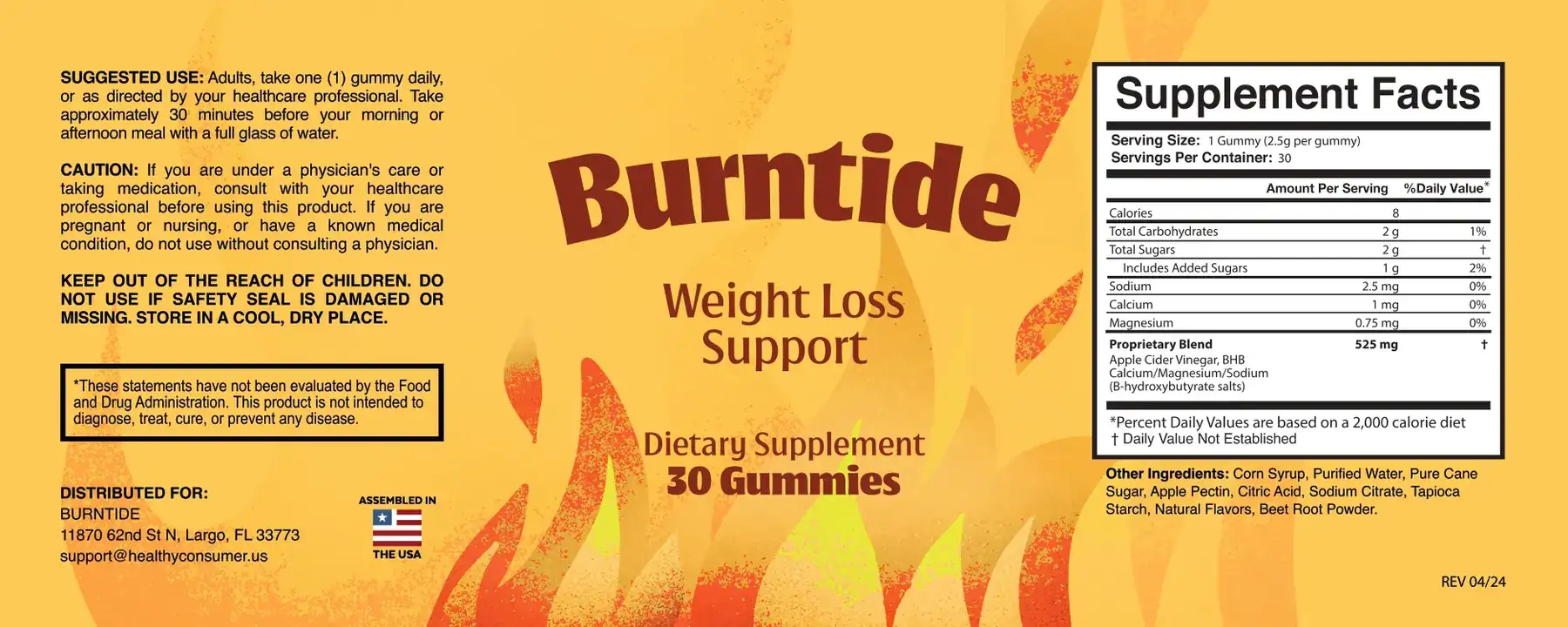
- Where the date sits: on the base of the jar, with the lot code, where the bottle shows it.
- The date itself: not published on this website. Read it from your own jar.
- Shelf life in months: not published.
- Lot on this desk’s record: BUR-26/BU-7063. Certificate reference BUR-7063-26-BU, which this desk has not read.
- Label revision: REV 04/24. That is a label version, not a date of expiry.
- Storage line on the label: store in a cool, dry place. Do not use if the safety seal is damaged or missing.
This page is general information, not medical advice. Burntide is a dietary supplement for healthy adults aged 18 and over. It is not a drug, and it is not FDA approved, as no supplement is. If you take medicine, are under a physician’s care, or are pregnant or nursing, speak to a doctor or pharmacist before use.
What does a Burntide expiration date mean on a supplement jar?
Three date words get mixed up on jars: expiration, use-by and best-before. They sound the same. They are not the same thing.
A best-before date is the maker’s statement of how long the product should keep its quality when you store it as directed. It is a quality date. An expiration date is a harder line, the point after which the maker no longer stands behind the product. Burntide’s published record uses the softer words: best-before, printed on the base of the jar where the bottle shows it.
So the honest answer has two parts. A date exists on the jar. This website does not hold a copy of it, because it changes from batch to batch, and printing a guess here would be worse than printing nothing.
Where is the Burntide expiration date printed on the jar?
Turn the jar over. The base is where the lot code and the best-before date are printed, together. The pack this desk works from says "where the bottle shows it", which is careful wording: it means some bottles show it and this desk cannot promise yours does.
The flat label wrapped around the side is a different place. It carries the directions, the caution text, the Supplement Facts panel, the distributor line and the storage warning. It does not carry a date of expiry.
| Printed item | Where | What it is | An expiry date? |
|---|---|---|---|
| Best-before date | Base of the jar, where the bottle shows it | The maker’s quality date | Yes, the closest thing |
| Lot code BUR-26/BU-7063 | Base of the jar | A batch identifier the order desk can look up | No |
| REV 04/24 | Corner of the flat label | The version of the label artwork | No |
| Certificate reference BUR-7063-26-BU | This desk’s record, not on the label | A pointer to a laboratory document this desk has not read | No |
| 30 servings per container | Supplement Facts panel | How many gummies are in the jar | No |
Is REV 04/24 an expiry date on the label?
No, and this is the single most common mix-up. REV 04/24 sits in the lower corner of the label. It reads like a month and a year, so people take it for an expiry. It is the revision mark of the label artwork, which is how a printer tells one version of a label from the next.
The same page also holds the words "Assembled In The USA", the distributor line for BURNTIDE in Largo, Florida, and the support email. None of those is a date. If your own jar shows a different revision, the label has been updated and this website should be told. The batch page explains how, and the website desk takes the note at [email protected].
How long does a Burntide jar last once you open it?
Not published. No time-after-opening figure appears on the label or in the desk’s pack, so none appears here.
What is published is the count and the directions. A jar holds 30 gummies, and the label says to take one a day. Used as directed, a jar is empty in 30 days, so the open-jar question is usually a short one. The longer question belongs to bulk orders. A three-bottle order is 90 days of supply. A six-bottle order is 180 days, which means the last jar is not opened until about 150 days after the first.
That is the real reason to read the date on arrival. A sealed jar on a shelf for months is the one where the best-before line matters most.
How should you store Burntide so the best-before date holds?
The label gives one storage rule: store in a cool, dry place. Nothing else is printed about temperature, humidity or the fridge, so this page adds nothing.
- Keep the jar off a sunny windowsill and out of a car glovebox. Both are warm, and neither is cool.
- Keep it away from a steamy bathroom shelf. Dry means dry.
- Close the lid after each gummy.
- Keep the jar where children cannot reach it. The label prints that line in capitals.
Whether a gummy softens in heat is not published for this product. If a jar has been somewhere hot and the gummies have changed, ring the order desk with the lot code instead of testing one.
What should you do with the safety seal and the date before you take the first gummy?
Do three quick checks. They take under a minute.
- Look at the safety seal. The label says do not use the product if it is damaged or missing. That is the one hard rule on the jar.
- Turn the jar over and find the lot code and, if the bottle shows it, the best-before date.
- Write both on the order email or in your phone. If you ever call about a jar, they are what the desk asks for.
If there is no date on the base, do not guess one. Call the order desk on +1 (631) 016-1313 and ask them to look up the lot.
What if the Burntide best-before date has passed, or is missing?
A passed date means the maker no longer stands behind the quality of that jar. The safe move is to stop and call the order desk, not to judge the gummies by eye or by taste. This website cannot tell you what an old jar will do, and the sources do not either.
A missing date is a different case. The wording "where the bottle shows it" admits that some do not. In that case, use the lot code. The order desk can match a lot to a batch record, and that record is what stands in for the date.
If your question is about a symptom rather than a jar, that is a clinician’s question. Report anything serious to FDA MedWatch, then give the lot to the order desk.
How does the best-before date connect to the lot code and the certificate reference?
They are three different things that all point at one batch. The date says how long the maker expects quality to hold. The lot says which batch the jar came from. The certificate reference points to a laboratory document held against that batch.
The desk keeps the reference, but nobody there has read the document itself. So it can say the reference exists. It cannot say what the document tests or finds. The batch page lays out four checks you can run on a jar, and what each one does and does not prove. The post on lot numbers and certificates of analysis goes word by word through the same codes.
Does the 60-day guarantee run from the best-before date?
No. The 60-day money-back window runs from the date you purchased, as shown on your order confirmation email. It has no link to the date on the jar base.
This matters for big orders. A six-bottle order bought on day one has a guarantee that ends while most jars are still sealed. The date on a sealed jar and the days left on the guarantee are two separate clocks. The guarantee page sets out the steps, who pays return postage and the processing times.
Seven words you may meet on and around the jar
- Best-before: the maker’s quality date. Printed on the base where the bottle shows it.
- Expiration date: the stricter cousin of best-before. Not a term used in this product’s published record.
- Lot: the batch. BUR-26/BU-7063 on this desk’s record.
- REV 04/24: the label version.
- Certificate reference: a pointer, BUR-7063-26-BU, to a document this desk has not read.
- Safety seal: the film or band under the lid. If damaged or missing, the label says do not use.
- Servings per container: 30. One gummy of 2.5 g per serving.
Frequently asked questions
Where is the Burntide expiration date?
On the base of the jar, next to the lot code, where the bottle shows it. The flat side label does not carry it.
What is the shelf life of Burntide in months?
Not published. This website does not state a number of months, so read the best-before date on your own jar.
Is REV 04/24 an expiry date?
No. It is the revision of the label artwork. Your jar’s best-before date is on the base.
How should I store Burntide?
The label says store in a cool, dry place and keep out of the reach of children. Do not use it if the safety seal is damaged or missing.
Can I still take Burntide after the best-before date?
Call the order desk on +1 (631) 016-1313 with the lot code before deciding. This website cannot judge an old jar.
Does the 60-day guarantee depend on the date on the jar?
No. It runs for 60 days from the date of purchase on your order confirmation email.
Our view
It is a small thing that people over-think and under-check. The useful move is simple: turn the jar over on the day it arrives and read what the base says.
The published record admits its own gap. It says the best-before date appears where the bottle shows it, and it gives no shelf life in months. We would rather print that gap than invent a number.
If you buy more than one jar, check each one. Keep the lot code with your order email, store the jars cool and dry, and call the order desk if a date is missing or has passed.
Sources named on this site
- U.S. Food and Drug Administration. Questions and Answers on Dietary Supplements. View source
- U.S. Food and Drug Administration. Dietary Supplement Labeling Guide. View source
- U.S. Food and Drug Administration. MedWatch: The FDA Safety Information and Adverse Event Reporting Program. View source
Last updated October 29, 2026.