Burntide Official Website › Blog › The Conversation
How To Talk To A Pharmacist About A Supplement
The highest-value check anyone reading this can run, and the one a product page has the least incentive to recommend. What to bring, what to say, the three questions, and what to do when the label will not answer them.

- Take the panel, not the brand name. A pharmacist can read a Supplement Facts panel. A brand name tells them nothing.
- Name every supplement, not only the prescriptions. Supplement-on-supplement stacking is the half nobody reports.
- Say what time you take things. Several of the real collisions are scheduling rather than chemistry.
- It is free and it takes five minutes, and it is the highest-value check anyone reading this can run.
General information, not medical advice. Burntide is a dietary supplement for healthy adults aged 18 and over. It is not a drug, it is not FDA-approved, and it is not intended to diagnose, treat, cure or prevent any disease. If you are under a physician’s care, take any medicine, or are pregnant or nursing, speak to a clinician or a pharmacist before using any product on this shelf. Nothing on this page replaces that conversation.
Why a pharmacist rather than a search engine
Because the question is not “does apple cider vinegar interact with anything”. It is “does this product, at this amount, matter for me, given everything else I take”. A search engine cannot answer the second question and a pharmacist can, in a few minutes, for nothing.
They also already hold half the information. A community pharmacy has your prescription record, reads panels for a living, and is used to being asked. The gap in the data is not pharmacist availability, it is that supplements do not get mentioned: a general-practice survey found most people taking a supplement and medicine combination had not told anybody about the supplement (Agbabiaka and colleagues, 2018).
There is one more reason, and it is the least comfortable one on this page. The website you are reading sells the product. It can tell you what the panel says, what the research used and where the gaps are, and it has an interest in you buying. A pharmacist has no interest in the outcome at all, which makes their answer worth more than this website’s on precisely the question that matters most.
What to bring to the counter
The jar, or a photograph of the panel
Both sides. The Supplement Facts panel gives them the ingredients and the amounts where those are published; the other-ingredients line gives them the allergens. A brand name gives them nothing at all.
A list of everything you take
Prescriptions, over-the-counter medicines, and every supplement including the ones you think are trivial. That last group is the one that gets left out.
The times you take them
This is the detail people skip and it is where several of the real collisions live. Write it down before you go, because nobody remembers accurately at a counter.
A photograph is genuinely enough. If you have not bought it yet, the full Burntide panel is transcribed on the label page and you can show them that.
What to say, in four sentences
People overthink the opening. It does not need to be more than this:
“I am thinking of taking this. It is a chewable gummy, one a day, about half an hour before a meal. The two actives are apple cider vinegar and BHB mineral salts, in a 525 mg blend that is not broken down. Here is what I already take.”
Four sentences, and the third one is the useful one
That third sentence saves the most time. Telling a pharmacist up front that the blend is not broken out means they do not spend two minutes looking for a number that is not there.
The three questions worth asking
| Ask | Why |
|---|---|
| “Does anything I take get affected by something that touches blood glucose?” | Vinegar and exogenous ketones both move glucose measures in trials (Hadi 2021; Falkenhain 2022) |
| “Does taking this half an hour before lunch clash with anything’s timing?” | Several collisions are scheduling rather than chemistry, and vinegar also slows gastric emptying (Hlebowicz 2007) |
| “Am I already taking something that duplicates this?” | Another vinegar product or a ketone powder is a dose question, and ketone powders are sold in grams (Margolis 2020) |
A fourth if it applies: dental erosion or sensitivity, because a chewable that contains vinegar and citric acid sits on the teeth.
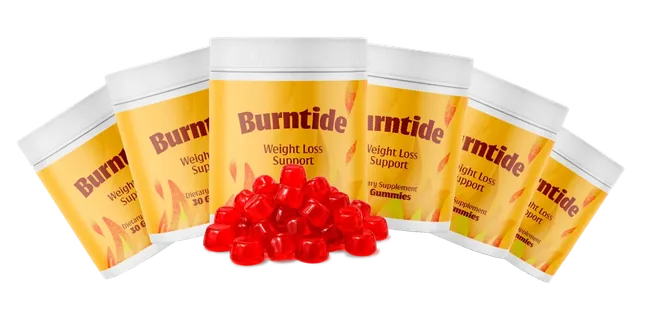
Ask first, buy second
That is the order this website recommends and it is why the safety page sits above the benefits page on the home page. One gummy a day, adults eighteen and over.
Price shows at the checkout, before you pay
Order BurntideWhat to do when the label will not tell them
This is the awkward part of the conversation for this particular product, and being ready for it makes the visit shorter.
The Burntide panel declares a 525 mg proprietary blend containing apple cider vinegar and BHB calcium, magnesium and sodium, and does not say how that splits. So the honest answer to “how much vinegar is in it” is: nobody knows, including the seller, and the only certainty is the ceiling.
Say exactly that. A pharmacist will know what to do with it, which is usually to reason from the ceiling: nothing in a 525 mg blend can exceed 525 mg, every trial used more, so the question becomes whether an amount below that ceiling matters for you. Narrowed like that, the question usually has a short answer.
What the answers usually sound like
It is worth knowing the shape of the likely replies, because an unexpected answer is easier to act on than a surprising one.
“That is too small to matter for you”
The most common answer for a healthy adult on nothing, and a reasonable one. The amounts on this panel are small and the ceiling is well below every trial dose.
“Not while we are adjusting that dose”
Common where a glucose-lowering medicine is being titrated. It is a timing answer rather than a permanent no, and it is worth asking again later.
“Move it to the other meal”
The usual fix for a scheduling collision, and it costs you nothing. The label allows either a morning or an afternoon meal.
“Ask your doctor”
Means the question is about your condition rather than about the product. That is a real answer, not a brush-off, and it is the correct escalation.
What to do with the answer
If the answer is yes, the routine is on the how to take it page and the honest timeline is three to six weeks rather than three days.
If the answer is no, that is the outcome this whole article exists for, and no amount of website changes it. If the answer is “not yet”, write down when to ask again.
And if you take it and something happens: stop, speak to a clinician if it is more than mild, and report it to FDA MedWatch, which takes reports from members of the public. Then call +1 (631) 016-1313 with the lot number so it is on record with the seller too. The emergency-department data exists because people reported things (Geller 2015), and most mild reactions never get reported at all.
If you do not have a pharmacist
Not everybody has a community pharmacy they use, or a prescription record sitting in one. Three fallbacks, in descending order of usefulness.
Any pharmacy counter, with your own list
A pharmacist who does not hold your record can still read the panel and tell you whether anything on your list is a known concern. Bring the list written down rather than remembered, because the version in your head is always shorter than the real one.
The clinician who prescribes for you
Slower, and the right route if the question is about your condition rather than about the product. Take the panel to that appointment too; a brand name in a consultation note is no use to anybody later.
The public fact sheets, read carefully
The NIH fact sheet on supplements sold for weight and NCCIH's guidance are written for exactly this situation. They will not tell you about your medication, and they will tell you what is known about the ingredients.
What none of those three is, including this website, is a substitute for somebody who knows what you take. If the honest answer is that you cannot get that conversation, the cautious course with any supplement is to leave it, and that is the answer this desk would give a member of its own family.
The honest summary
Five minutes, free, with somebody who already knows what you take. It is the highest-value check in this entire website and it is the one a product page has the least incentive to recommend, which is roughly the definition of a thing worth recommending.
If you would rather read first, NCCIH on using supplements wisely and the safety guide on this website cover the same ground at more length, and neither ends in a recommendation to buy anything.
Sources cited in this article
- Hadi A, Pourmasoumi M, Najafgholizadeh A, Clark CCT, Esmaillzadeh A. The effect of apple cider vinegar on lipid profiles and glycemic parameters: a systematic review and meta-analysis of randomized clinical trials. BMC Complement Med Ther. 2021;21(1):179. PMID 34187442. View source
- Hlebowicz J, Darwiche G, Bjorgell O, Almer LO. Effect of apple cider vinegar on delayed gastric emptying in patients with type 1 diabetes mellitus: a pilot study. BMC Gastroenterol. 2007;7:46. PMID 18093343. View source
- Falkenhain K, Daraei A, Forbes SC, Little JP. Effects of exogenous ketone supplementation on blood glucose: a systematic review and meta-analysis. Adv Nutr. 2022;13(5):1697-1714. PMID 35380602. View source
- Margolis LM, O'Fallon KS. Utility of ketone supplementation to enhance physical performance: a systematic review. Adv Nutr. 2020;11(2):412-419. PMID 31586177. View source
- Geller AI, Shehab N, Weidle NJ, et al. Emergency department visits for adverse events related to dietary supplements. N Engl J Med. 2015;373(16):1531-40. PMID 26465986. View source
- Agbabiaka TB, Spencer NH, Khanom S, Goodman C. Prevalence of drug-herb and drug-supplement interactions in older adults: a cross-sectional survey. Br J Gen Pract. 2018;68(675):e711-e717. PMID 30249608. View source
- U.S. Food and Drug Administration. MedWatch: The FDA Safety Information and Adverse Event Reporting Program. View source
- National Center for Complementary and Integrative Health. Using Dietary Supplements Wisely. View source

Every page, every journal post, the bottle facts and the ingredients go through review by Dr. Dean Tomlin before they ship. We write from the printed Burntide Supplement Facts panel and this desk’s own paperwork, cite public research beside the amount that research actually used, and print “not published” wherever a figure is not disclosed rather than estimating it. This website earns when you buy. Corrections are made on the page itself and the review date moves forward. Write to [email protected]. Last updated September 17, 2026.